trends and outlook
Is the shift toward shorter engagements changing how I stock and schedule my shop?
More brides are shopping inside a nine month window. What that does to special order viability, off the rack inventory depth, sample size range, and your alterations calendar.
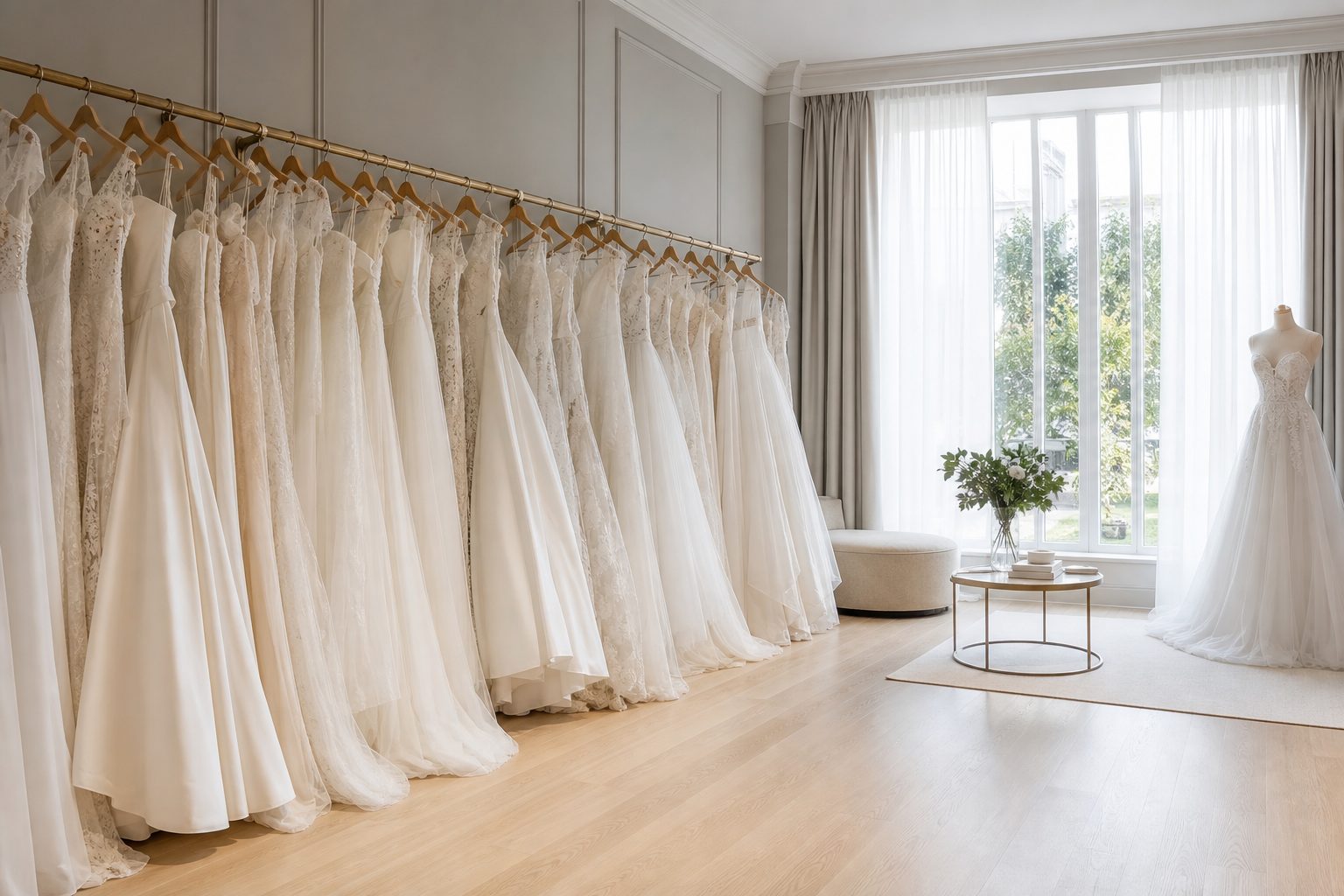
Yes, and mostly in two places: how deep you buy off the rack, and how early you commit seamstress hours. A bride shopping nine months out can still special order from most houses. A bride shopping five months out is buying whatever is physically in your building or nothing at all, and she will still expect the gown altered and pressed with two weeks to spare.
That is not a merchandising problem so much as a capacity problem. Shorter booking windows compress the gap between the sale and the alterations, which means the same annual volume arrives in tighter clusters and hits a seamstress calendar that has not grown.
What follows is how to size off the rack stock against a rush book, how to price a compressed alterations schedule without guessing, and where to hold the line so a rush intake does not damage the brides who booked properly.
Why the booking window matters more than the season
Bridal has always been seasonal, with a shopping peak after the holidays and a wedding peak in the warmer months. Owners plan around that, and it is stable enough to plan around.
The booking window is different. It is the distance between the day she walks in and the day she wears it, and it determines which of your two businesses she belongs to. Above roughly eight months she is a special order customer: you sell from samples, order to measurement, and the gown arrives with time to alter. Under about five months she is a stock customer: she buys something in the room, and the whole job is alterations.
The dangerous zone is the middle. Five to eight months is where a designer with a fourteen week production lead can still deliver, but only if the order goes in the same week and nothing goes wrong. One delayed shipment inside that window and you are altering under pressure or refunding.
Measure your own window before you change anything
Pull the last hundred orders. For each, record the date the deposit was taken and the wedding date, and take the difference in weeks. Sort the list and read the median and the bottom quartile.
That bottom quartile is your rush book. If a quarter of your brides sit under twenty two weeks, you need stock depth and protected seamstress hours whether or not the overall market has shifted. Do not act on anybody's claim about a national trend. Act on your own hundred rows, which are free to count and specific to your town.
Keep reading: What should I check on a gown the day it arrives from the designer before I call the bride?
Off the rack capacity: how much stock a rush bride needs
A rush bride needs choice in her size, not choice in general. Forty gowns on the floor of which three fit her is a shop with no rush inventory.
Work backward from your target. Say you want to serve two rush brides a week, roughly a hundred a year, and you expect to sell to one in three who tries. That is three hundred rush appointments and, at a realistic four gowns tried per appointment in her size, the floor has to be able to present six to eight wearable options every time.
Practically that means depth in the middle of your size run and a willingness to hold sizes you would not stock as samples. It also means a discipline most shops lack: when a rush gown sells, it is replaced or the slot is closed. A rack that only depletes stops being a rush offer within a season.
Sample size range and the alterations load that follows
The size you carry determines the alteration you will do, and those alterations are not equal in hours.
| Situation | Typical work | Relative labor |
|---|---|---|
| Gown one size large, unfitted skirt | Side seams, hem, bustle | Baseline |
| Gown two or more sizes large, fitted | Full bodice reconstruction, reset lace, hem, bustle | Two to three times baseline |
| Gown small, needs letting out | Limited by seam allowance, may need panels or a corset back | Two times baseline, sometimes impossible |
| Heavily beaded or lace bodice | Bead removal and reapplication at every altered seam | Adds substantially to any of the above |
Carrying only larger samples pushes you toward the expensive rows of that table on every rush sale. Carrying a wider range costs inventory dollars but buys back seamstress hours, and seamstress hours are the scarcer resource in a compressed calendar. If you must choose, widen the range before you deepen any single size.
Rush order relationships with designers who can deliver
Not every house is usable inside six months. Some produce in batches with fixed cut dates and cannot help you at any price. Some hold finished stock in a domestic warehouse and can ship in days.
Ask each of your designers three specific questions and write the answers on one sheet: standard production lead time in weeks, whether a rush option exists and what it costs, and whether they hold any finished inventory available for immediate ship. Add a fourth column for their color and size availability on that immediate stock.
That sheet is what your consultant needs in the room with a rush bride. Without it, she is either promising something the house cannot do or turning away a sale the house could have filled from a warehouse.
Keep reading: How many fitting appointments does one gown really take from first pin to pickup?
Pricing a compressed alterations schedule
A rush fee is not opportunism. It is the price of displacing other work and paying overtime, and you should be able to show the arithmetic.
Take a rush job needing twelve seamstress hours delivered inside four weeks, in a month already booked. Assume a seamstress rate of $32 an hour on straight time and $48 on overtime, and assume eight of the twelve hours have to be overtime because the regular calendar is full.
- Straight time: 4 hours at $32 is $128
- Overtime: 8 hours at $48 is $384
- Direct labor cost: $512, against $384 if the same job ran on normal time
- Incremental cost of the rush: $128
If your standard alterations pricing already carries your overhead and margin on the $384 baseline, a rush fee of $150 to $200 covers the incremental cost and the scheduling disruption. Those are illustrative rates, so run yours. The point is that a percentage rush surcharge invented on the spot will be wrong in both directions: too little on a beaded bodice, too much on a simple hem.
State the rush threshold in weeks on your price list, and apply it every time. A fee you waive when asked is a fee your staff cannot quote with a straight face.
Protecting the seamstress calendar from rush intake
This is the operational core, and it is where a shift toward short engagements actually breaks a shop.
Your seamstress has a finite number of hours per week. Every rush intake either uses spare hours, or takes hours from a bride who booked in January for a September wedding. The second option is invisible until three weeks before her wedding, when there is no room left to recover.
The rule to adopt: reserve a fixed share of weekly seamstress capacity for rush intake, and refuse rush work once that share is spent, regardless of how good the sale looks. Twenty percent is a reasonable starting share. On a forty hour week that is eight hours held open, which is one moderate rush job or two simple ones.
Two supporting habits make the rule enforceable. First, estimate hours at intake, in writing, before the deposit is taken, not after the gown is on the rack. Second, book the fittings themselves as calendar appointments the day the order is written, so the hours are visibly committed rather than notionally available.
See how VeilFittings handles this for bridal retail and alterations
Deposit and cancellation terms on a short timeline
Short timelines change your exposure. On a nine month special order, a cancellation at month two still leaves you time to resell a returned deposit slot. On a five month off the rack sale with alterations already cut, there is nothing to recover.
Adjust the terms to match:
- Take alterations payment in full at the first fitting on any rush job, not at pickup. Once fabric is cut the work cannot be resold.
- State plainly that off the rack sales are final, with no exchange, and have her initial it.
- Write the fitting dates into the agreement as obligations, not suggestions. A missed fitting on a five month timeline is the single most common cause of a late gown.
- Name the date after which you cannot guarantee completion, and say what happens if she brings the gown in after it.
None of this is harsh. It is the same protection a longer engagement gives you automatically through slack in the calendar.
What to keep on the floor versus what to special order
Use a simple test on every style you consider buying. Ask whether the gown earns its floor space as a sample that sells special orders, or as stock that a rush bride carries out.
Samples should be the styles that photograph well, represent a designer you order from regularly, and sit in a size your consultants can pin convincingly. Stock should be forgiving silhouettes with generous seam allowance, in colors that do not date, in the sizes your rush book actually asks for.
A gown that is neither, a dramatic one off in a single unusual size from a house with a sixteen week lead, is the most expensive thing on your rail. It sells rarely and it cannot serve a rush bride at all.
Getting the calendar to show you this
Every decision above depends on seeing, at a glance, how many gowns are due in the next six weeks, which fittings are already committed, and how many seamstress hours are genuinely free before you say yes to one more rush bride.
VeilFittings puts gown orders, fitting appointments and seamstress workload on one board, so the consultant on the floor can see the real capacity behind a promise before she makes it, and the pickup date a bride is given is one the shop can actually hold. Count your own hundred rows first. Then give the calendar somewhere honest to live.
Read also
What should I check on a gown the day it arrives from the designer before I call the bride?
Receiving inspection is your only clean window for a claim. A step by step check of shade, sizing, construction and hardware to run before the gown ever goes on a hold rack.

How many fitting appointments does one gown really take from first pin to pickup?
Two fittings is the number most shops quote and rarely the number they deliver. A breakdown of appointment counts, chair time per stage and how to schedule the room around real duration.
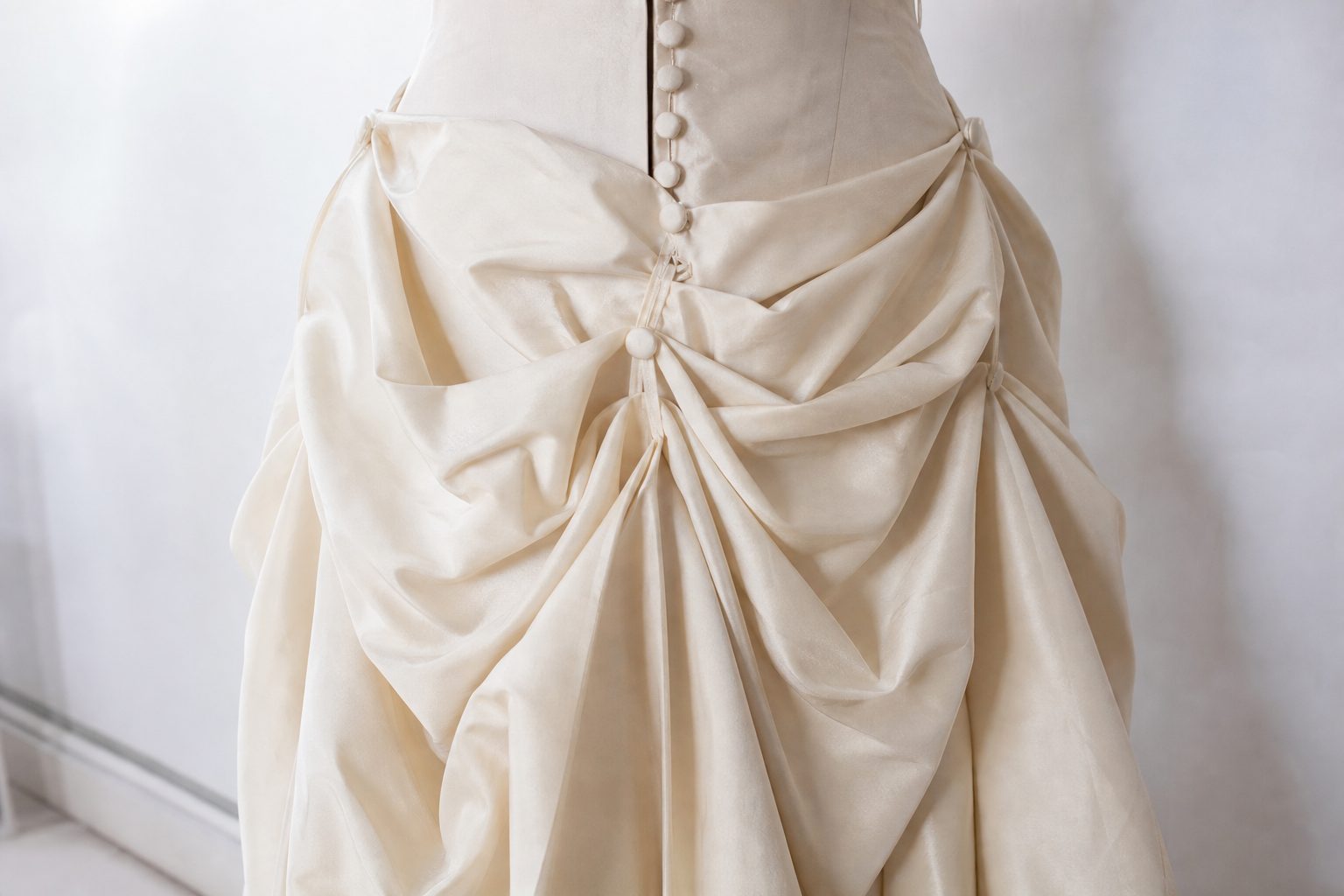
What does a bustle really cost to build, and why do brides argue about the price?
An American bustle on a cathedral train is hours of hand work hidden under a skirt. From the fitting room floor: how bustle types differ, what drives the labor, and how to explain it.