field report
What does a bustle really cost to build, and why do brides argue about the price?
An American bustle on a cathedral train is hours of hand work hidden under a skirt. From the fitting room floor: how bustle types differ, what drives the labor, and how to explain it.
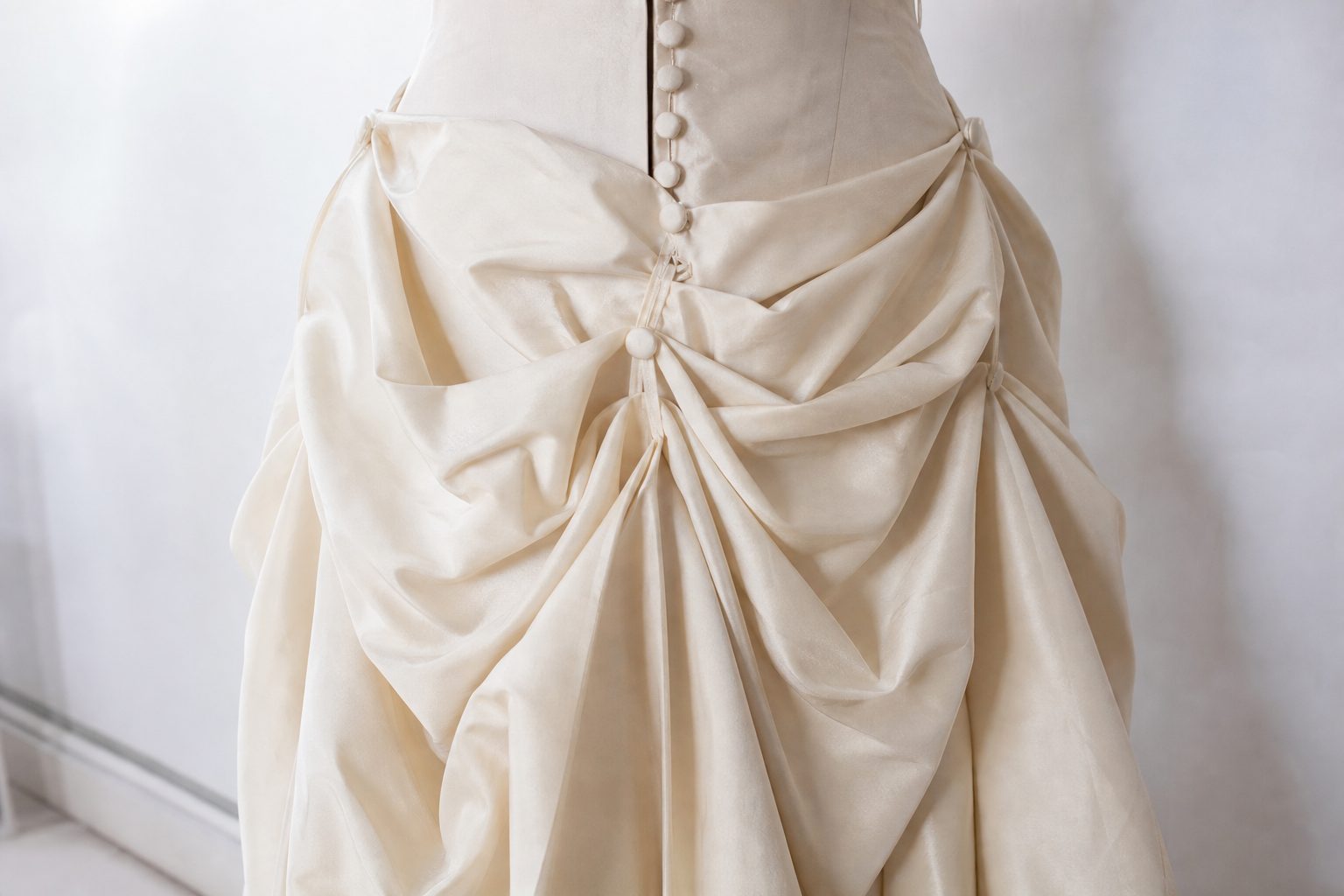
A bustle costs what it costs because it is hand work, and hand work is measured in hours. An American bustle with five pickup points on a chapel train in a single layer of satin is perhaps two hours at the bench. The same technique on a cathedral train with tulle, horsehair, a beaded hem and eleven pickup points is six to eight hours, all of it hand sewn, most of it invisible when the gown is down.
Brides argue about the price because the finished bustle looks like nothing. It looks like the skirt got shorter. There is no new fabric, no visible seam, no obvious object she can point to and value. Compared with a hem, where she watched you cut off eight inches, the bustle appears to be a knot.
The fix is not a discount. It is showing her the loops before you tie them, quoting it in writing before the first fitting, and describing the labor in terms of counted parts rather than adjectives.
American, French and ballroom bustles and how each is built
American, the over bustle
The train is lifted and fastened on top of the skirt, usually with covered buttons on the outside of the gown and hand sewn loops on the underside of the train. It sits high, it reads as intentional drapery, and it is the most forgiving with heavy fabric because the weight hangs on the outer skirt where you can reinforce it.
French, the under bustle
The train is gathered up underneath and secured to ribbons or twill tape sewn to the inside of the skirt. The outside of the gown shows a smooth swagged curve and no hardware at all. It is the more discreet look and it is the more demanding build, because every anchor point is hidden and you cannot see what is holding it while you are wearing it.
Ballroom, the floor bustle
Multiple short pickups lift the train just to floor length so the skirt reads as one continuous hem with no visible bustle at all. It usually takes the most points, often nine to fifteen, because every point has to lift a small amount and the eye catches any dip. Popular on ballgowns for exactly the reason it is expensive.
There is also the wrist loop, a single ribbon that hooks over her hand. It is fast, it is cheap, and it occupies one of her hands all night. Offer it honestly as the budget option, not as an equivalent.
Keep reading: How far out should I be ordering a bridal gown so it lands before the first fitting?
Train length and layer count as the real cost drivers
Two variables predict most of the labor: how far the train extends past the hem, and how many separate layers have to be lifted together.
| Train | Typical extension | Common point count | Rough bench hours, single layer |
|---|---|---|---|
| Sweep | Just past the heel | 1 to 3 | 1 to 2 |
| Chapel | About 3 to 4 feet | 3 to 7 | 2 to 3 |
| Cathedral | About 6 to 8 feet | 7 to 13 | 4 to 6 |
| Royal or monarch | Beyond 8 feet | 11 and up | 6 and up |
Point counts and hours here are planning ranges from bench work, not measured averages. What is not a range is the multiplier from layers. A cathedral skirt in four layers, lining, two tulle, horsehair edged organza, is not four times one layer, but it is much closer to that than to one, because every point either lifts all four together through a reinforced anchor or needs its own set per layer.
Hand sewn loops, buttons and reinforcement on heavy fabric
Almost none of a bustle can be done on a machine. The anchor points sit in the middle of a finished skirt where a machine foot cannot reach without opening a seam, so it is needle and thimble.
Each point on an American bustle is roughly: mark the position with the gown on the form and the train lifted to test the drape, hand sew a thread loop or a small ribbon loop sized to the button, sew a covered button on the outer skirt anchored through a reinforcement patch on the inside, and test it. Then adjust, because the fourth point changes the drape of the first three.
The reinforcement is the part brides never see and the part that fails when it is skipped. A single button carrying the weight of a wet cathedral train through four hours of dancing pulls out of a lightweight lining and takes a hole with it. Behind the button there should be a patch of firm fabric, sometimes twill tape, spreading the load into the seam structure.
Weight matters twice: once for the reinforcement, again because a heavy gown has to be handled on and off the form repeatedly to test drape, and that handling is real time.
Why a beaded or lace hem doubles the work
Beading turns each anchor point into a small surgery. You cannot sew a loop through a beaded ground without first removing beads from the exact spot, and if the beads are on a chain stitch the whole line will unravel if you cut it wrong. So the sequence becomes: locate the point, secure the bead line on either side, remove beads, build the anchor, then hand replace beads over or around the hardware so the point disappears.
Lace has a different problem. A scalloped lace hem is the design feature the bride bought the gown for, and a bustle point placed in the wrong spot folds a scallop under itself. Placement has to follow the motif rather than the geometry, which means testing more positions before committing to any.
On a beaded cathedral train, it is entirely normal for the bustle alone to consume more bench hours than the hem, the side seams and the strap adjustment combined. That is the sentence brides need to hear, in those words.
Keep reading: Should I price alterations by the piece or by the hour in my bridal shop?
Quoting the bustle before the first fitting, not after
Price disputes happen when the number arrives after the work. Put it on the alterations estimate at the pin fitting, itemized separately from the hem, with the point count written down.
Build the quote in front of her:
- Identify the train length and the number of layers that must lift.
- Choose the bustle type together, and show her the difference on the actual gown by hand holding the drape.
- Count the points required for that type on that train, and say the number out loud.
- Multiply your bench hour rate by the estimated hours, or use a per point price if that is how you quote.
- Add the beading or lace surcharge if the hem is embellished, as a separate line.
- Write the total on the estimate she signs, with a note that a change of bustle type after work begins is a new quote.
A worked example with assumed numbers. Suppose your bench rate is 65 dollars an hour. A cathedral train, three layers, ballroom bustle, eleven points, estimated at five and a half hours, is 357.50 dollars in labor. Add a beaded hem surcharge of one and a half hours, another 97.50 dollars, for 455 dollars. Those figures are illustrative. Substitute your own rate and your own timing, but do the multiplication in front of the bride rather than presenting a round number that looks arbitrary.
Teaching the bridal party to tie it at the final appointment
An eleven point ballroom bustle that nobody can tie is a bustle you did not sell. Build the lesson into the final appointment as a scheduled segment.
- Number the points, and mark the pairs so loop and button match. Colored thread tacks on the inside work well and can be removed later.
- Have the person who will actually do it on the day tie it twice, with their own hands, while you watch and correct.
- Photograph the finished bustle from the back and the loop pairs up close, and send both to the bride.
- Tell them the order matters: center first on most builds, then work outward, or the drape will not sit.
- Warn them it takes a few minutes and to do it somewhere with room, not in a bathroom stall.
See how VeilFittings handles this for bridal retail and alterations
When a gown needs a hybrid or custom bustle
Some gowns refuse the standard three. A detachable overskirt with a separate train may need its own points. A gown with a heavy beaded panel down the center back cannot take an American button where the geometry wants one, so you move to a French anchor on that section and keep buttons on the sides. Very sheer skirts show every ribbon and force an over bustle even when the bride wanted a French.
Hybrids are legitimate work, and they take longer because there is no template. Price them by estimated hours and say clearly that the gown's construction is what dictated the approach, not preference.
Language that makes the labor visible without arguing price
Do not defend the number. Describe the work.
Your train is six feet and it is three layers, so the bustle needs eleven separate points. Each one is a hand sewn loop, a covered button and a reinforcement patch inside so it holds the weight all night. On your hem the beading has to come off at every point and go back on afterward so you cannot see the hardware. That is about seven hours of hand work, and it is why it is priced separately from the hem.
Then show her the inside of the skirt at the check fitting. Once she has seen eleven reinforced anchors on the underside of her own gown, the conversation is over. Nobody argues with something they have looked at.
Getting the bustle onto the record
The bustle is decided at one appointment, built over weeks, and taught at another, and it is the item most likely to fall out of the notes between them. VeilFittings keeps the gown, its alteration line items and every fitting appointment on one board the whole shop can read, so the point count agreed in March is still attached to the gown in June, and the seamstress workload view shows what those hours are doing to the week they land in. Quote it once, record it once, and stop rebuilding the estimate from memory.
Read also
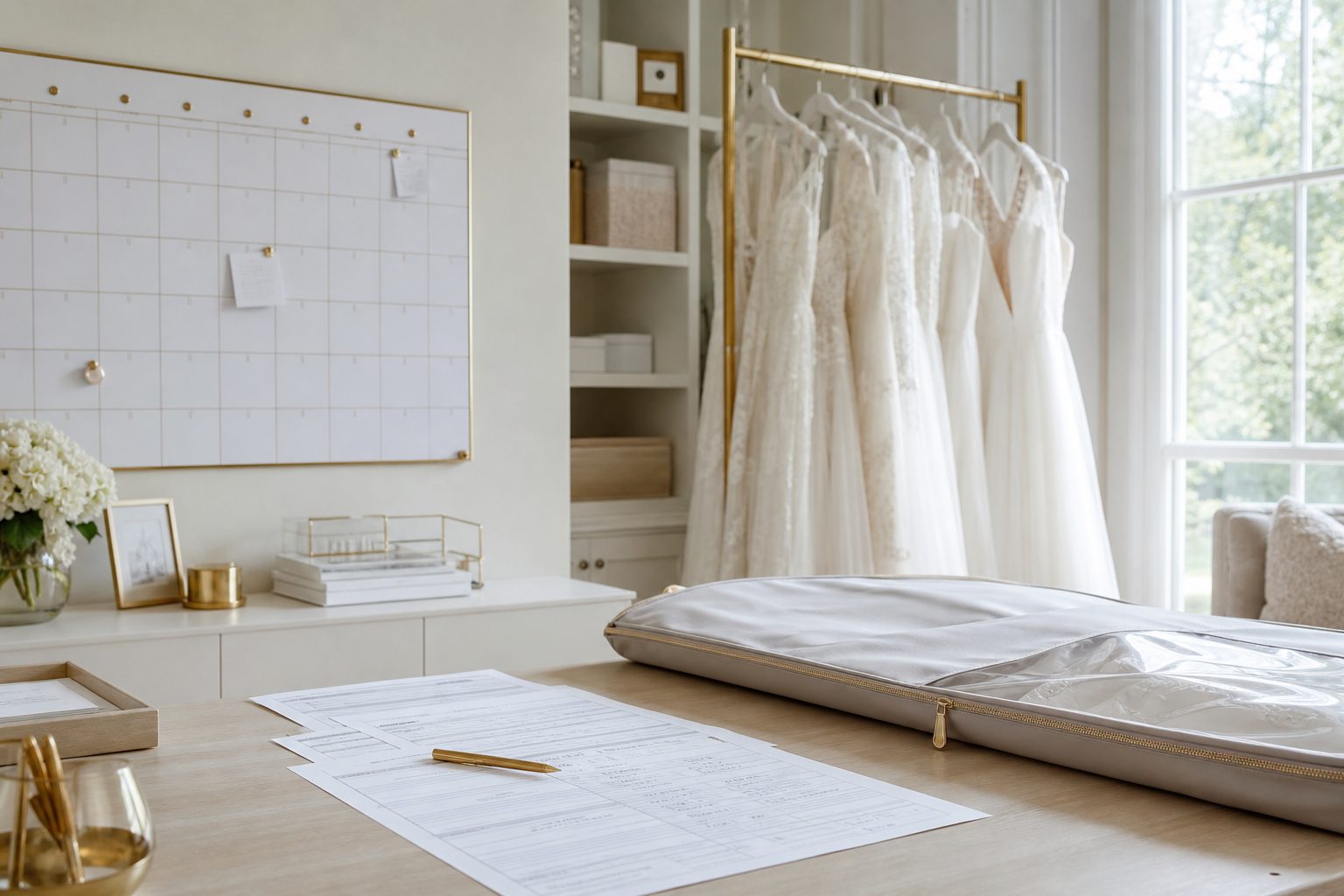
How far out should I be ordering a bridal gown so it lands before the first fitting?
Designer production windows, shipping, and your own alterations calendar all stack. Here is how to work backward from the wedding date and build the buffer that keeps a rush cut off the invoice.
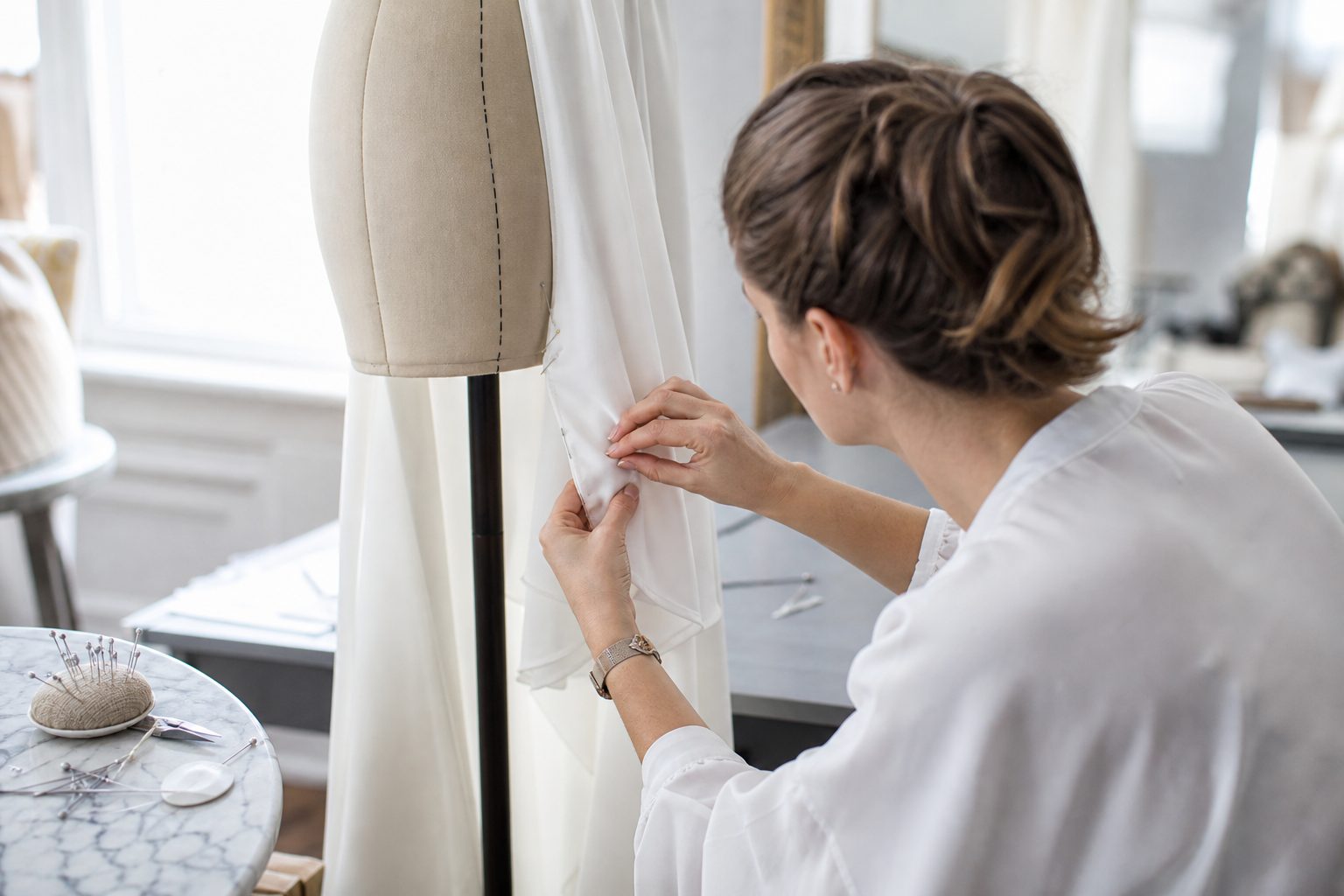
Should I price alterations by the piece or by the hour in my bridal shop?
Flat per-task menus read cleanly to a bride but bleed margin on couture. Hourly protects the seamstress and unsettles the customer. A working comparison of both models for a bridal fitting room.
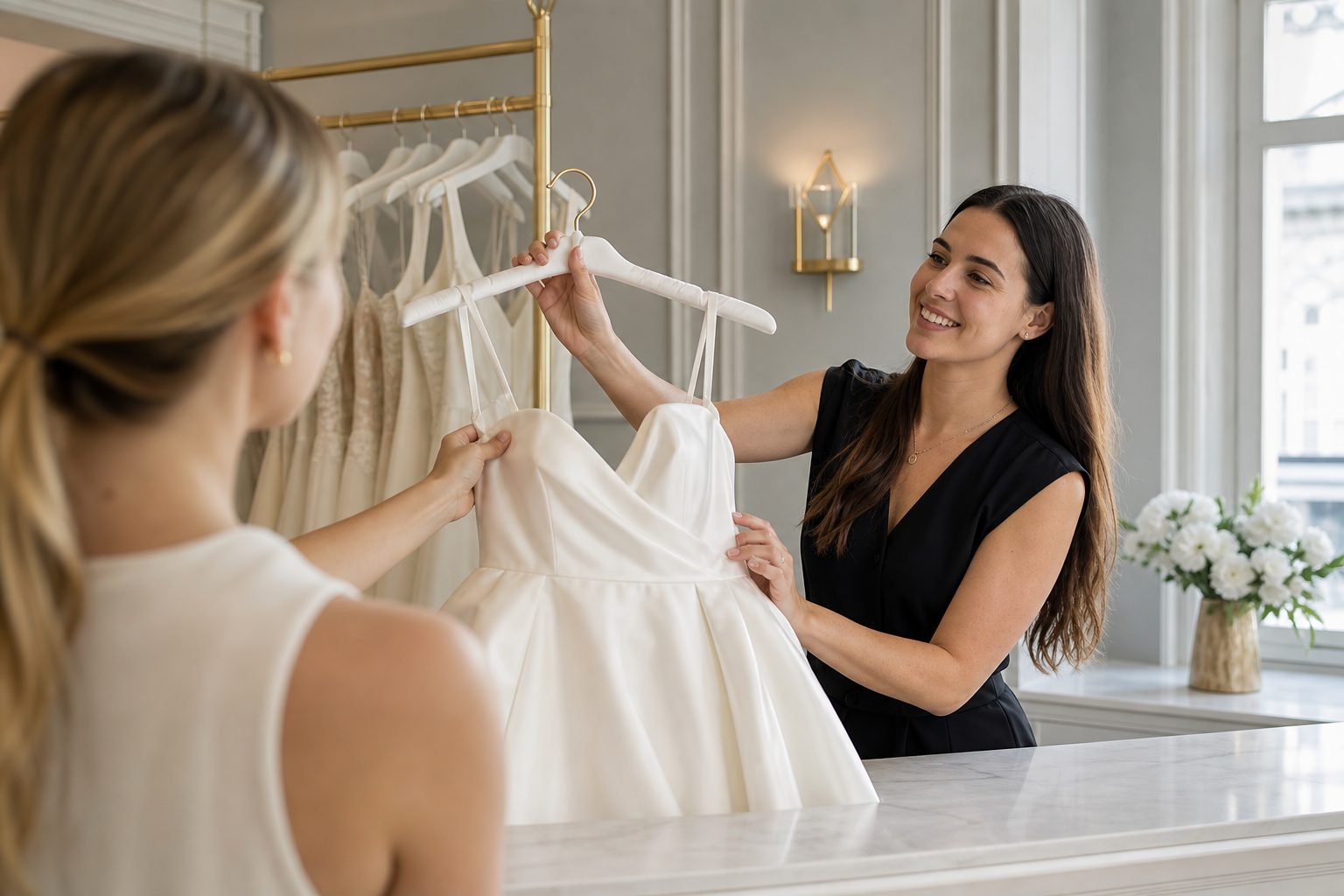
What goes wrong when a bride brings her own seamstress into my alterations process?
Outside alterations are common and legitimate, but they blur liability on a gown you sold. The handoff mistakes that turn into a chargeback, and the release language that prevents them.